Your SaaS Needs an Agent Interface Before Your Team Builds One Anyway
Business software is splitting into two surfaces: the interface people use and the capabilities agents call. If you do not design the second one, teams will assemble it from connectors, browser automation, and whatever credentials they can find.
Most software teams still think of their product as a screen. A person signs in, finds a record, clicks an action, and checks the result.
Agents change that assumption. The user is no longer always a person navigating the interface. It may be a system assembling a client report, checking an order exception, preparing a quote, or updating a project after an approval.
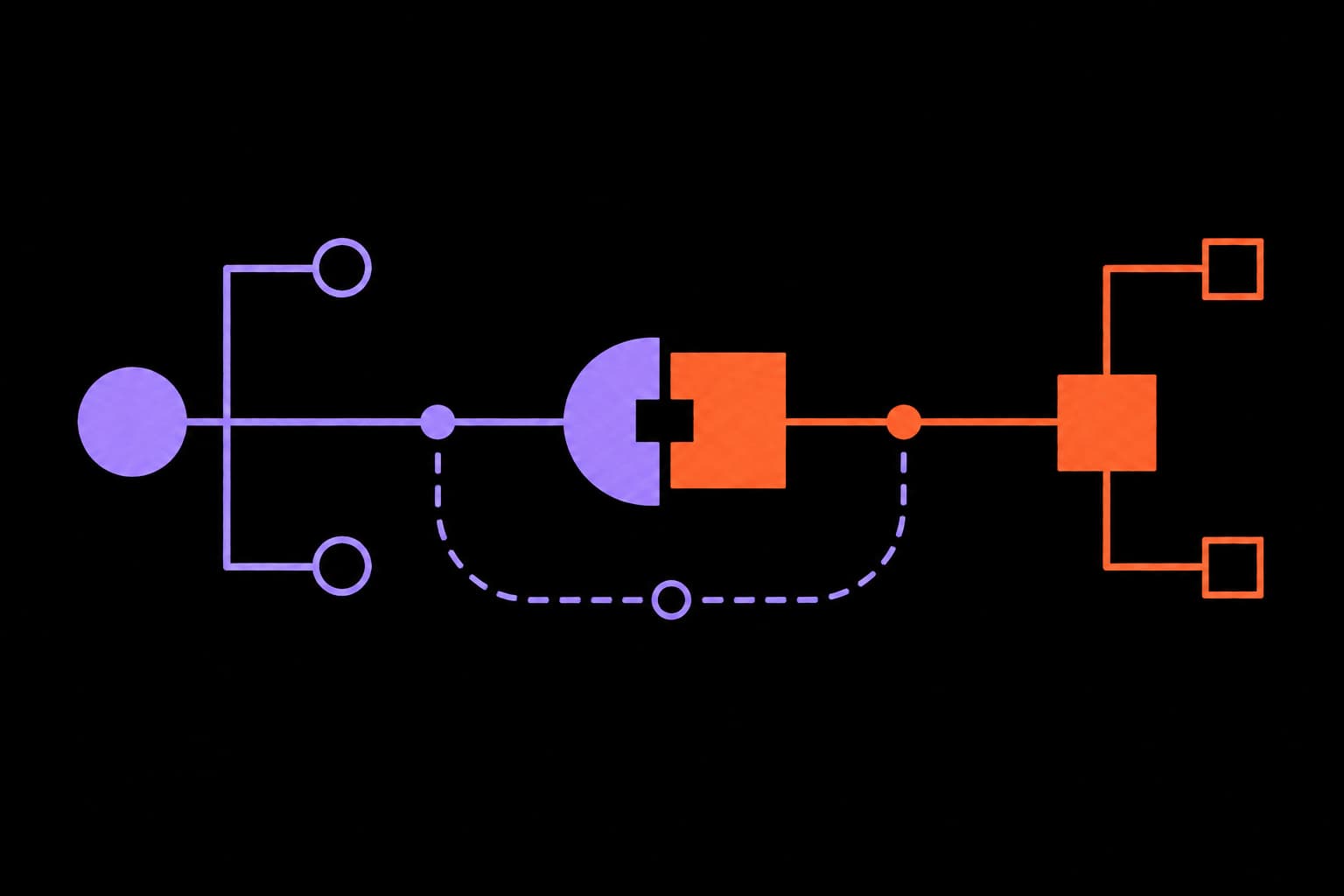
This does not make the human interface obsolete. It creates a second interface alongside it: a set of business capabilities that software can discover, call, and verify.
That second interface is already being built. The only question is whether the business designs it deliberately.
Agents will route around a screen-only product
When a product does not expose a usable capability, teams rarely stop wanting the outcome. They connect a generic automation platform. They write a one-off integration. They give an agent a browser and ask it to click through the same screens as a person.
Each workaround can succeed in a demo. The operating problem appears later.
Browser flows break when a label or layout changes. Generic APIs expose database-shaped primitives rather than complete business actions. Credentials get copied into tools with broader access than the workflow needs. Errors are reported as technical failures instead of business exceptions. Nobody can easily tell which agent changed a record or why.
The product still has an agent interface. It is just an accidental one, spread across scripts, tokens, connectors, and undocumented assumptions.
An API is not automatically an agent interface
Traditional APIs are often organised around internal resources: create a record, update a field, list objects, or trigger a job. That is useful plumbing, but it pushes the business logic into every caller.
An agent needs a capability with a clear outcome. "Prepare a renewal quote using the current contract and approved pricing" is a capability. Six endpoint calls that might produce a quote are ingredients.
The distinction matters because agents make integration cheaper. More callers will appear, written by more teams, with less shared context. If each caller must reconstruct pricing rules, permissions, validation, and retry behaviour, the business has multiplied its risk along with its speed.
Protocols such as MCP can make capabilities easier for agents to discover and use. They do not decide what should be exposed. A clean protocol around a badly scoped action only makes the wrong thing easier to call.
Expose business outcomes, not database access
A useful agent capability should pass four tests.
Useful
The capability completes a recurring unit of work with a visible business outcome, not just a technical action.
Bounded
Its inputs, permissions, limits, and possible effects can be described without relying on hidden human judgment.
Verifiable
The caller can confirm what happened, what changed, and whether the result met the workflow's acceptance rules.
Recoverable
Failures are explicit, retries are safe, and consequential changes can be held, reversed, or escalated.
This usually means the capability owns more of the operating logic than a thin API wrapper. It validates identity and current state. It applies the same policy regardless of which agent calls it. It returns a result a workflow can evaluate. It records the evidence needed to investigate an exception.
The agent can decide when to request the capability. The product remains responsible for enforcing what the capability is allowed to do.
Start where shadow interfaces already exist
Do not begin with a company-wide MCP programme or a catalogue of every possible action. Start by finding work that people are already forcing through the software indirectly.
Look for exported CSV files that feed weekly reports, repeated copy-paste between systems, browser automations, Zapier chains, internal scripts, and shared credentials. These are not only technical debt. They are demand signals for missing capabilities.
A sensible exposure order
Read and summarise
Retrieve current records, status, history, and policy without changing the source system.
Prepare a reversible draft
Create a quote, task, report, response, or proposed update that a person can inspect before release.
Execute within a limit
Allow a narrow action only when identity, value, policy, and approval conditions are satisfied at execution time.
Read-only access is the safest place to learn. Draft creation adds leverage while keeping release authority with a person. Bounded execution should come last, after the workflow has clear limits, live checks, approval rules, and evidence.
Some actions should remain human-only. Irreversible payments, unusual contractual commitments, destructive administration, and high-ambiguity customer decisions may not be worth exposing. An agent interface is a decision about boundaries, not a target to automate everything.
The interface needs an owner
Agent capabilities sit between product architecture and business operations. Leaving them entirely to either side creates a gap.
Engineering can define schemas, authentication, and reliability. Operations must define the acceptable outcome, source of truth, exception path, approval threshold, and owner when the result is wrong. Security must define the identity and authority model.
That is why copying a connector from a marketplace is not enough. The hard part is not making an agent call the tool. It is turning an informal process into a governed capability that survives new callers, changing models, and real exceptions.
Decide the capability surface before it spreads
Agents are making software integration easier to attempt. They are not making weak interfaces safer to operate.
The practical move is to audit where agents and automations already touch your stack, identify the business outcomes hiding behind those workarounds, and expose the smallest useful capability with an explicit owner and boundary.
If you wait, teams will still build agent interfaces. You will just inherit them after they become operational dependencies.
Agents already touching your software stack?
Map the capability surface before you automate more.
Tessera identifies the shadow interfaces, recurring business outcomes, authority boundaries, source systems, and approval rules around one workflow, then turns them into an implementation plan your team can govern.
Audit the workflowSource notes
- Latent Space's August 27, 2026 interview with Lovable CTO Anton Osika on agent-usable SaaS capabilities: latent.space/p/lovable-future-of-saas
- OpenAI's examples of AI-native companies turning connected workflows into operating capability: openai.com/index/ai-native-company-workflows
- Simon Willison's August 30, 2026 analysis of ChatGPT Work and its connected capability model: simonwillison.net/2026/Aug/30/understanding-chatgpt-work