Your AI Workflow Has a Supply Chain Problem
Frontier AI access, pricing, safety routing, and data terms can change faster than normal software contracts. If a workflow matters to the business, it needs a continuity plan before it becomes critical.
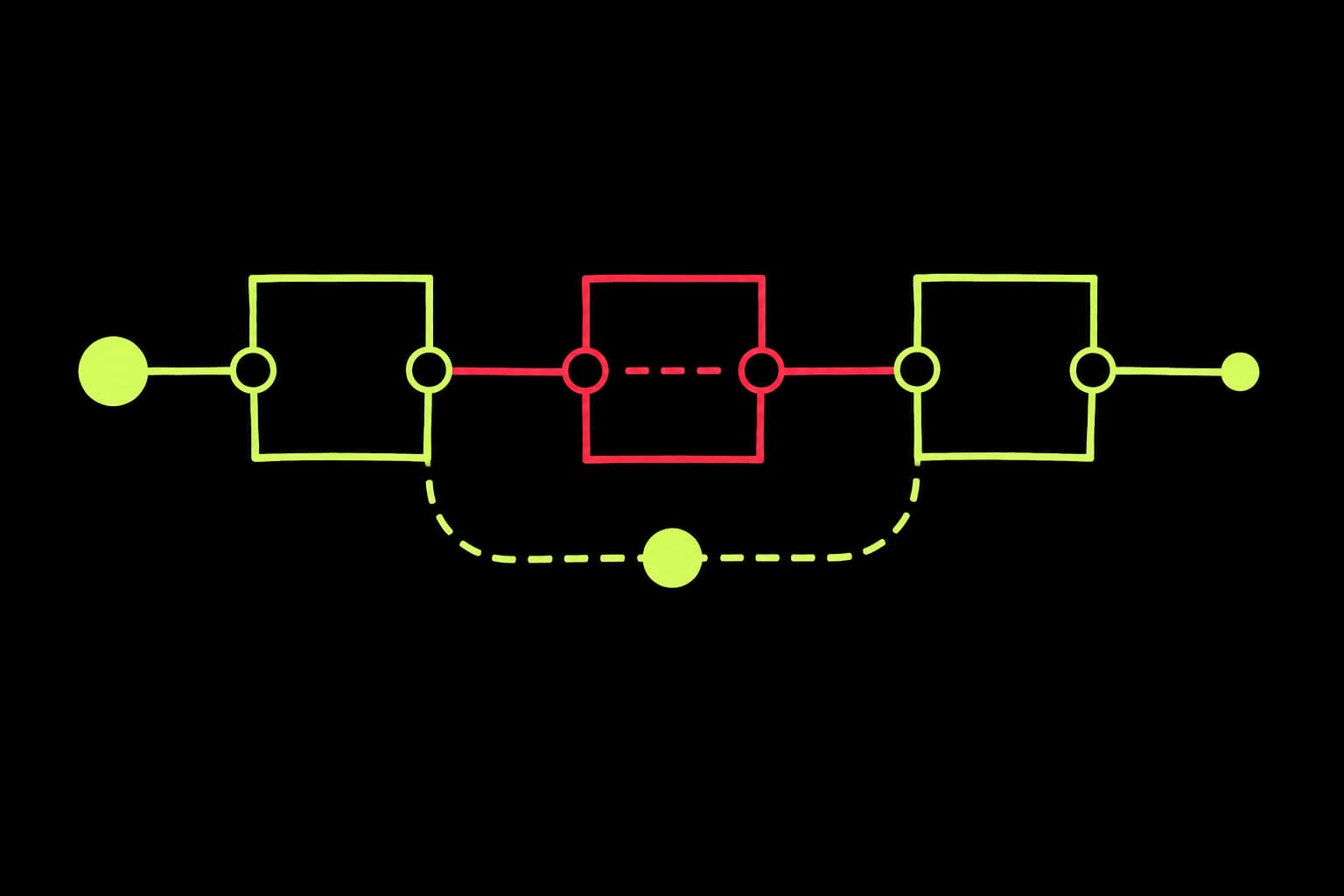
On June 12, 2026, three days after launching Claude Fable 5 and Claude Mythos 5, Anthropic said it had to suspend access after a US government directive. The same launch week also surfaced a separate enterprise concern: Mythos-class models introduced a 30-day retention window with no zero-data-retention opt-out, including on Bedrock and Enterprise.
The point is not that Anthropic is uniquely risky. The point is that frontier AI is becoming operating infrastructure before most companies have treated it like operating infrastructure.
A model is no longer just a model. It is a bundle of capability, cost, latency, routing behaviour, regional availability, safety policy, data retention, human review, and regulatory exposure. When any one of those changes, the workflow built on top can change too.
The risk is dependency, not AI
Most teams think about AI risk in terms of hallucination, security, or vendor diligence. Those still matter. But there is another category that becomes more important as AI workflows move from experiments into production: supply chain risk.
If a sales workflow depends on one model to classify leads, draft replies, and update the CRM, what happens when that model becomes unavailable? If a reporting workflow depends on a provider with zero data retention, what happens when the best model in that family requires a 30-day retention window with no zero-data-retention opt-out? If an operations assistant uses a cloud-hosted model through a regional endpoint, what happens when the region, model, or policy is no longer approved?
These are not abstract legal questions. They decide whether the workflow keeps running on a bad day.
Layer
Model
The workflow can route between approved models with tested quality thresholds, not just swap a model name in an environment variable.
Layer
Policy
The workflow knows which data classes are allowed under each provider's retention, review, regional, and subprocessor terms.
Layer
Operation
Operators know when to pause, escalate, use a reduced-capability route, or fall back to a manual path.
Provider-agnostic does not mean model-agnostic
A common answer is to just use multiple models. That is directionally right, but too vague to be useful. A workflow is not resilient because it can call a second API. It is resilient when the second route has been tested against the job it needs to perform.
Lead triage may survive a cheaper fallback model. Contract review may not. Support summarisation may tolerate lower reasoning quality. Compliance classification may need a second opinion instead of a single fallback. A research workflow may be fine with slower latency. A live customer workflow may need an immediate manual queue.
The work is not picking a favourite model. The work is mapping the workflow, the risk level, the data involved, and the acceptable degradation path.
Data terms are now part of the architecture
The Bedrock discussion around Anthropic's Mythos-class retention policy exposed a bigger lesson for operators: cloud placement does not automatically answer the data-governance question. Even on Bedrock and Enterprise, the relevant detail was not vague retention risk. It was a specific 30-day window with no zero-data-retention opt-out. The same model can carry different terms depending on provider, surface, region, product tier, and safety requirement.
For business workflows, that means data classification has to sit close to the orchestration layer. Customer records, source code, contracts, financial data, health information, and internal strategy documents should not all follow the same route just because the prompt template is convenient.
A production workflow should know which models are allowed for which data classes, what gets logged, what can be retained, who can review it, and how to prove that the policy was followed after the fact.
Minimum model-risk register
Critical workflow
Which business process would stop, slow down, or become riskier if this model disappeared?
Provider dependency
Which vendor, cloud region, model family, API feature, or data policy is the workflow relying on?
Fallback route
What happens if the preferred model is unavailable, too expensive, slower than normal, or no longer approved?
Data exposure
Which prompts, files, customer records, source code, or outputs may be retained, reviewed, or moved across boundaries?
Approval gate
Which actions must pause for human review before money, customers, systems, or public content are affected?
Evidence
Can you show logs, tests, thresholds, incidents, and operator decisions after the workflow runs?
Build the fallback before the workflow is important
The cheapest time to design continuity is before the workflow is relied on. Once the team has built habits around an AI system, every emergency change becomes political and operational at the same time.
Start small. Pick the workflows that already touch revenue, customer experience, compliance, or internal throughput. For each one, document the preferred model, approved fallback, manual path, data classes, approval gates, and evidence trail. Then test the fallback with real examples before you need it.
This does not mean every workflow needs enterprise-grade architecture. A low-risk internal summariser can be simple. A workflow that sends customer emails, changes prices, reviews legal text, handles source code, or updates operational systems needs more care.
The practical takeaway
Treat critical AI workflows like part of your software supply chain. Know the provider dependency, data terms, fallback route, and approval gate before the workflow becomes important.
The goal is not to avoid frontier models. The goal is to stop confusing model strength with operational reliability. A workflow is only production-ready when the team knows what happens if the model becomes worse, slower, more expensive, unavailable, or no longer approved for the data it handles.
Need to harden an AI workflow?
Start with a workflow continuity audit.
Tessera maps the workflow, identifies model and data-policy dependencies, designs approval gates, and gives you a fallback plan before the system becomes mission-critical.
Audit the workflowSource notes
- Anthropic's June 12, 2026 statement on Fable 5 and Mythos 5 access: anthropic.com/news/fable-mythos-access
- Anthropic's Mythos-class data-retention help article: support.claude.com
- AWS launch notes for Claude Fable 5 on Bedrock: aws.amazon.com/blogs/aws